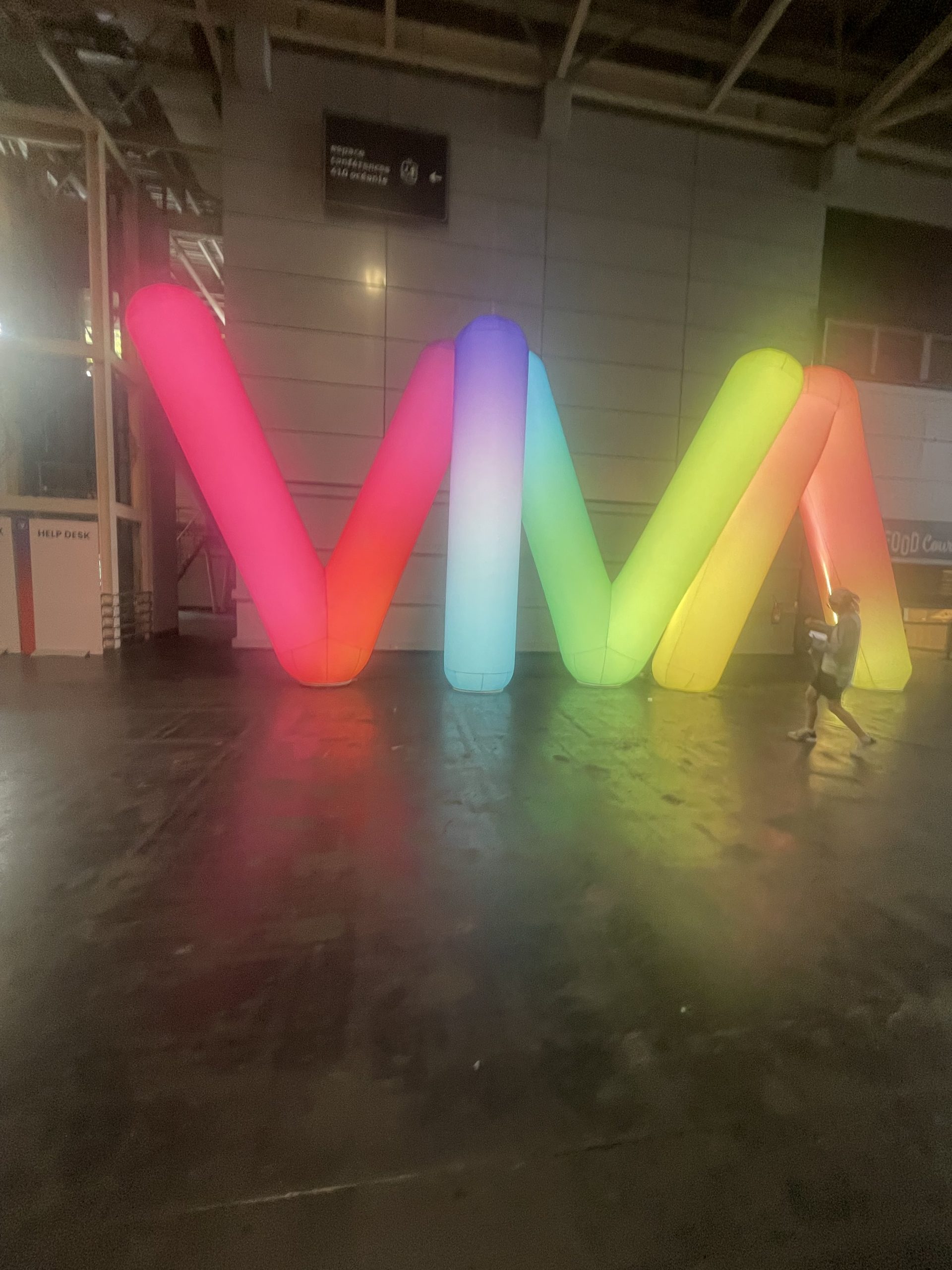
This year, I walked the floors of VivaTech. For context: the 2026 edition (the 10th) ran June 17–20 at Paris Expo Porte de Versailles, under a pretty on-the-nose theme: “Artificial Intelligence: impact, not illusion.” Quite a program when you make your living doing SEO and GEO.
I went in with my SEO/GEO consultant glasses on 👀 : who’s actually working on visibility in generative engines? Who’s tackling the real production AI problems (costs, governance)? And who just slapped “AI” on a gimmick use case to put on a show?
Here’s my recap inevitably subjective, organized by what stood out.
SEO/GEO players at VivaTech 2026
SEO and GEO aren’t (yet) the stars of VivaTech. The conversation is infrastructure, robotics, sovereignty, agents. But a few players from the SEO/GEO ecosystem were there — and that’s an interesting signal in itself: LLM visibility is starting to be taken seriously by decision-makers, not just by SEOs.
Meteoria was there, and I’m going to dwell on this one, because it’s exactly the type of tool I talk about here a lot.
Meteoria is a 100% French GEO platform used by 1,000+ companies. The concept is straightforward once you’ve accepted the paradigm shift: classic SEO means showing up in a results page; GEO means becoming a source of the AI’s answer. The user no longer sees ten blue links — they see a synthesis. The question is no longer “am I in position 1?” but “is ChatGPT, Gemini, Perplexity, or AI Overviews citing me, and how?”
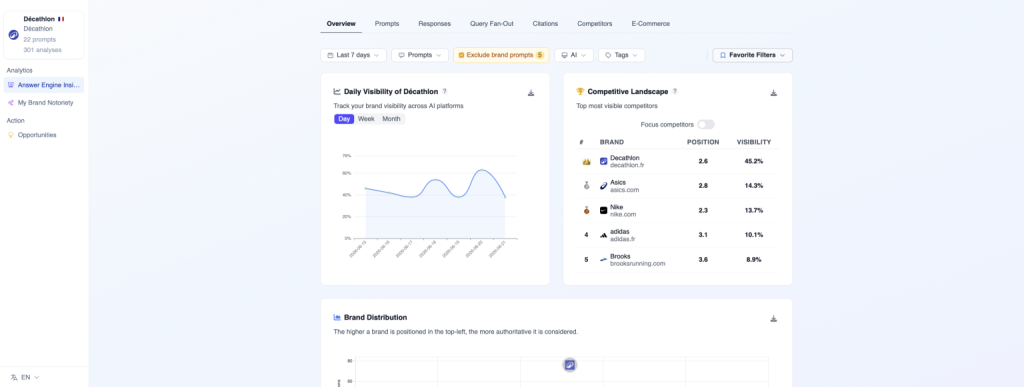
Concretely, Meteoria queries the major AIs daily with strategic prompts, then archives and analyzes every response. It doesn’t just give you a presence yes/no — it returns a multi-LLM Visibility Score (share of voice engine by engine), a citation and trusted-source map, sentiment and competitive analysis, and an Action Engine with checklists to make your content LLM-friendly. It also breaks down query fan-out — the sub-queries an AI generates behind the scenes to answer a prompt. For e-commerce people: there’s a dedicated module for ChatGPT product carousels.
GetMint wasn’t there. And that surprised me.
For context: GetMint is the other big French GEO solution — a startup that raised €4M in late 2025 and claims 200+ clients. What sets it apart from Meteoria is that it goes beyond monitoring: it combines AI visibility measurement, an integrated Content Studio to produce content, and distribution through a network of 150,000+ partner publishers. It covers ten LLMs (ChatGPT, Claude, Gemini, Perplexity, Grok, AI Overviews, Mistral, DeepSeek, Copilot, Meta AI) and has a proprietary visibility score based on probabilistic simulations.
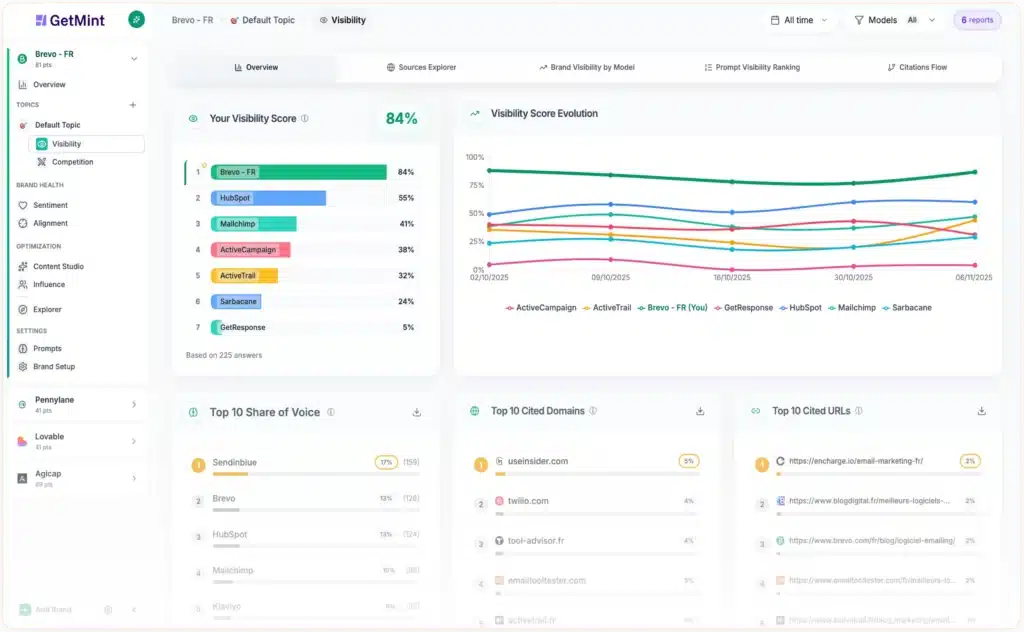
A serious GEO player, in other words, who would have fit perfectly right next to Meteoria. Their absence is puzzling — strategic choice, scheduling, budget? I don’t have the answer. But when you’re building your brand on visibility, not being present where decision-makers are paying attention is a bet I don’t quite understand.
Eskimoz was there. If you don’t know them, they’re one of Europe’s biggest SEO agencies, now clearly positioned on the Search + GEO combo. Seeing an agency of that size at VivaTech — not just software vendors — confirms something I’ve been saying for a while: GEO is no longer a niche topic for tech people, it’s become a boardroom conversation. When an agency comes to pitch AI visibility to investors and enterprise buyers, the demand is real.
Token management players at VivaTech 2026
The standout here is Scaleway (Hall 7.3 — their CEO Damien Lucas took the stage, notably on “Sovereignty & Ethics”). The French cloud player has positioned itself very clearly on sovereign AI inference, with two products that directly touch token management.
On one side, Generative APIs: serverless endpoints serving open models (Llama, Mistral, Qwen, Gemma, Pixtral…) billed per million tokens, with an OpenAI-compatible API and a Batches mode offering -50% on non-real-time workloads. On the other, Managed Inference (rebranded as Generative APIs Dedicated Deployment): dedicated GPU infrastructure at a fixed hourly rate with unlimited tokens, built for high-throughput workloads where you want predictable costs rather than a meter running hot.
Scaleway’s argument goes beyond price: it’s sovereignty. Prompts and responses stay in Europe, under GDPR jurisdiction, and are neither read nor reused. When the whole salon was orbiting around digital sovereignty, hosting your inference on European infra instead of a US hyperscaler becomes a strategic argument as much as a financial one. One telling detail: Mistral and Kyutai both run on Scaleway’s infrastructure.
Why should a SEO/GEO care? Because if your GEO strategy relies on agents querying LLMs at scale — daily monitoring of hundreds of prompts across multiple engines, which is exactly what it is — the token bill becomes a direct cost line. GEO and token management are two sides of the same coin: producing AI visibility has an inference cost, and knowing how to control it is part of the job.
AI governance players at VivaTech 2026
Another category clearly on the rise: AI governance. With the EU AI Act rolling out, companies need to prove they control their AI systems, and a whole market has emerged for that.
Two names to remember.
Hodor (hodor.ai, by Colibri) attacks the problem from the most operational angle: it’s the identity, policy, and guardrails layer for AI agents. The name is a perfect wink for those who have the reference: “Hold the door.” The idea is to hold the door on agents.

Concretely, Hodor lets you give each agent a unique identity (who deployed it, when, with what permissions — no more shadow AI running through infra unchecked), define fine-grained access by tool and scope (an agent can read contacts but not delete them, make 10 updates per hour maximum, query the database read-only but not drop tables), enforce those rules in real time, and log every action in a full audit trail. All with a kill switch to shut down an agent that goes off the rails. They’re announcing 35+ integrations (Stripe, Linear, Postgres, Supabase, GitHub, Slack…).
This is exactly the type of tool that will become indispensable as agents take real actions inside enterprise systems. When an agent can place an order, modify a database, or send a payment, you need a layer that decides what it’s allowed to do. Hodor is that.
Credo AI is the other heavyweight, often cited as the category leader. The platform governs agents, models, and applications across the full lifecycle: register, assess, govern, monitor, report. Their strength is Policy Packs that encode regulations (EU AI Act, NIST, ISO 42001, NY Local Law 144) into ready-to-use evaluation requirements, plus an in-house governance assistant (GAIA). One detail that matters: Credo AI participates directly in writing regulatory frameworks, and was ranked by Fast Company among the most innovative companies of 2026, alongside Google, Nvidia, OpenAI, and Anthropic.
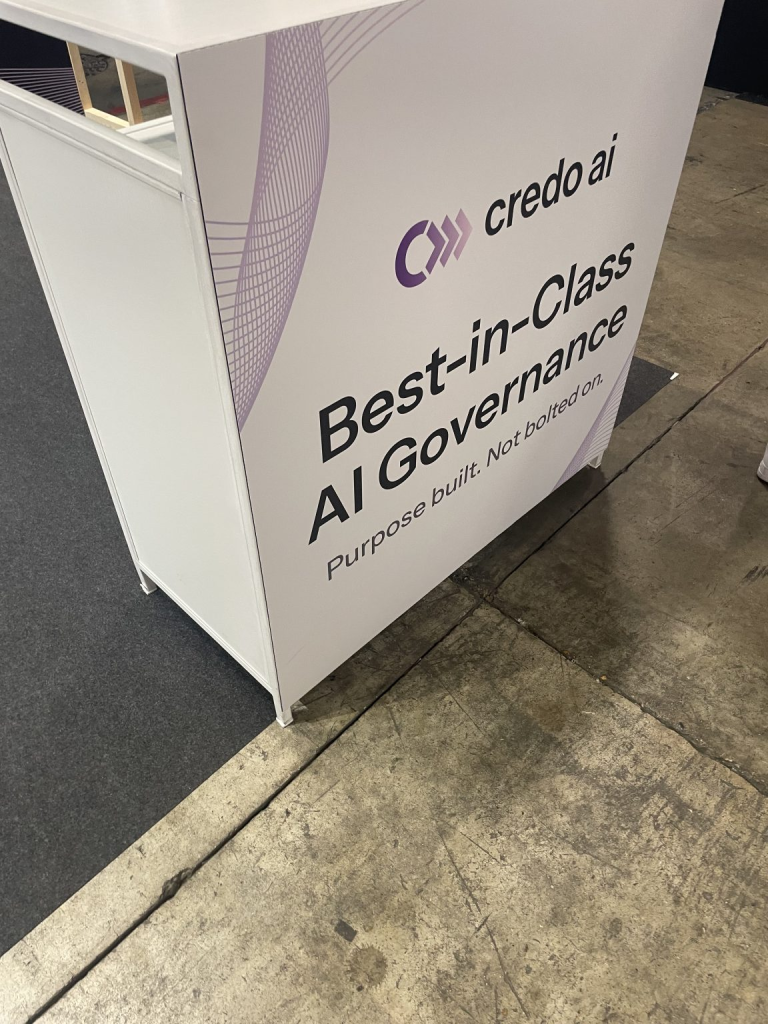
The connection to our field isn’t obvious at first glance, but it exists. The day your content, structured data, and entities feed AI systems, the traceability and compliance of those systems become your problem too. AI governance is the layer that decides which sources are deemed reliable and usable. Not a small thing when all of GEO is precisely about becoming a trusted source.
Agentic commerce players at VivaTech 2026
The word agentic echoed everywhere — from Microsoft stands to LVMH. Online commerce will be driven by AI agents soon. Especially with the support Google, Shopify, and others are throwing behind protocols like WebMCP, UCP, A2A, etc. The question now is: are our e-commerce sites even readable by these new agents?
Because concretely, we’re shifting from a web where humans typed a query, clicked a result, browsed a site… to a web where an AI agent decides for you. It compares, filters, and buys.
Here’s what stood out.
LVMH held a central place with its DreamGallery, showcasing 12 projects from 11 houses. Three agents in the spotlight: Célia (Celine), powered by MaIA (the group’s internal AI platform), assists retail teams in real time with stock, product info, and after-sales. Gaston (Louis Vuitton) — same logic, same architecture, deployed on LV advisor workstations. And the most interesting thing for us SEOs: a Louis Vuitton app integrated directly into ChatGPT — the user can interact with the brand without ever opening a browser.
Perfect Corp. presented their Beauty AI Agent with an Agent-to-Agent (A2A) integration compatible with Claude and ChatGPT. The principle: a brand that already has its own AI agent can plug in Perfect Corp.’s module as a skill — skin analysis, product recommendations, virtual try-on — without touching its existing infra. The brand’s agent delegatesbeauty tasks to Perfect Corp.’s specialized agent, which returns the result in the conversational flow. Multi-category, pay-as-you-go, automatic intent discovery at startup.
My GEO take: A2A architecture is exactly where the agentic web is heading. Today it’s beauty, tomorrow it’s every e-commerce vertical. For SEOs, that means thinking about visibility in agent registries (agent.json, llms.txt) as much as in classic SERPs.
Onepoint × Microsoft ran live demos of a Sales Mate Agent that dialogues with a CRM in natural language, surfaces hot opportunities, writes follow-ups, and optimizes the sales funnel — no human touching an interface. The “build your business agent in 45 min” workshops were fully booked all three days. The signal is clear: companies are no longer in curiosity mode, they’re in deployment mode.
My GEO take: when CRM agents start searching for suppliers or comparing offers for their users, who shows up in their results? Exactly the same visibility problem as SEO — but for machines. Share of Model becomes a direct commercial KPI.
Keyban presented its Agent Wallet: a wallet infrastructure built so AI agents can execute transactions autonomously, with configurable rights delegation and spending limits. In short, the financial plumbing of agentic commerce.
My GEO take: if agents can pay, the purchase funnel breaks completely free of the browser and classic checkout. For e-commerce players, that rethinks the entire UX/CRO logic. For SEOs, it shifts even more value toward machine trust optimization — reviews, certifications, third-party data.
The rise of “bad AI”
And then there’s what I’m calling, for lack of a better term, “bad AI”. The flip side of the salon.
Alongside the players tackling real problems — costs, governance, visibility, fundamental research — a good chunk of the big stands (L’Oréal, Samsung, and so on) were deploying AI on use cases I found genuinely unimpressive. Filters, “detect your favorite perfume,” gimmick experiences calibrated for the selfie and the Instagram story.
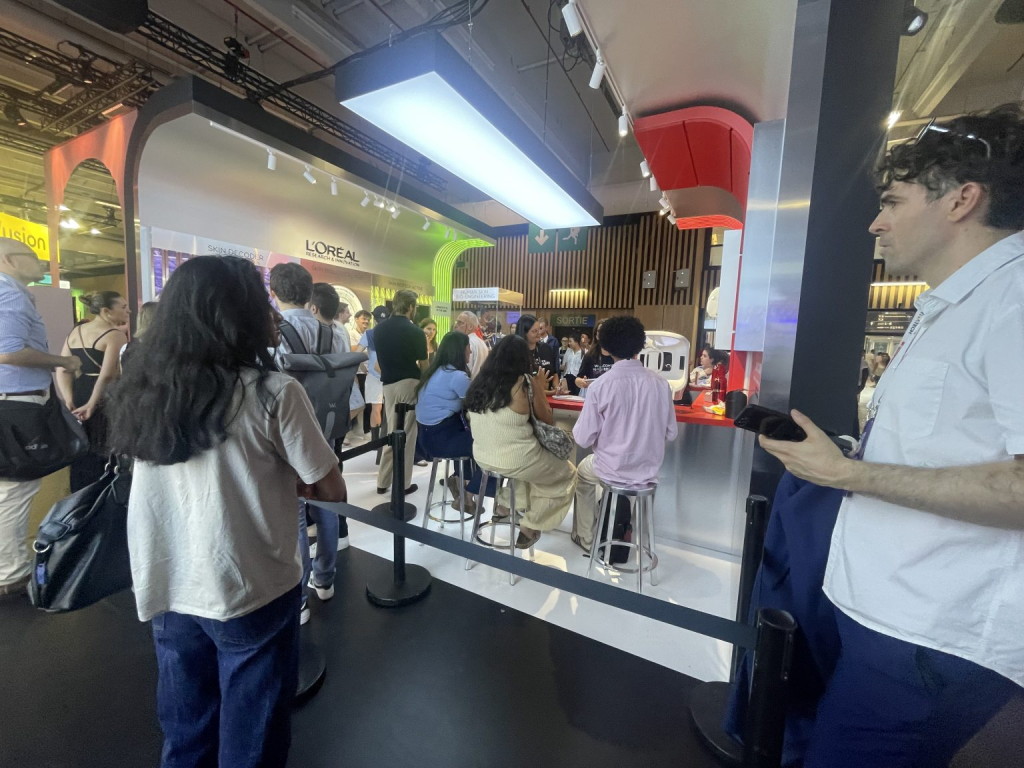
What bothers me isn’t the animated stand per se. A trade show is also entertainment — I get that. What bothers me is that we’re mobilizing a technology that isn’t cheap (inference costs money, we literally just talked about it with FinOps) for near-zero-value use cases. We’re firing up GPUs, burning tokens and energy, to have an algorithm guess your perfume. When the salon’s official theme is “impact, not illusion,” there’s a certain irony in seeing this much illusion on the biggest stands.
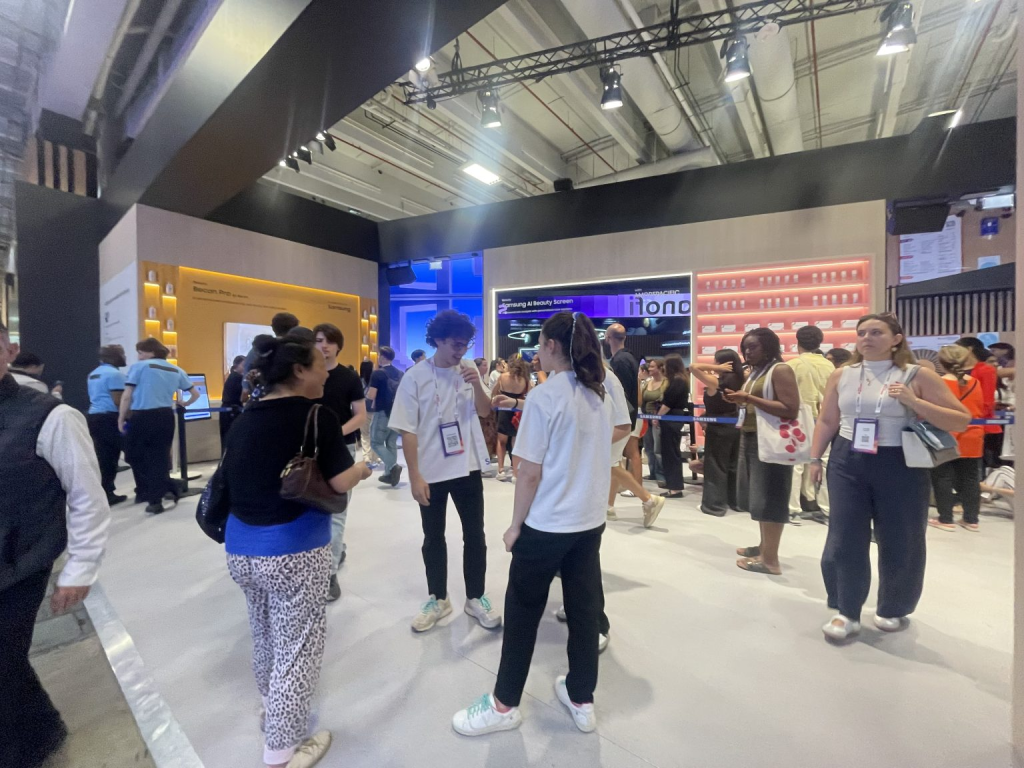
My SEO/GEO point here: this “bad AI” is polluting public and decision-maker perception. It keeps alive the idea that AI is a marketing gimmick, while the uses that actually matter — measuring your visibility in generative responses, controlling inference costs, governing your systems — are infinitely less photogenic but infinitely more strategic. The real work happens on the small stands and inside the tools, not at filter kiosks.
What I’m taking away
VivaTech 2026, from a SEO/GEO consultant’s seat: three good signs and one reservation.
The good signs: GEO is landing on decision-makers’ radar (Eskimoz, Meteoria were there), inference cost management is becoming a serious topic (FinOps for AI), and AI governance is structuring fast (Hodor, Credo AI). All of this signals that AI is entering its adult phase: we’re measuring, optimizing, governing.

The reservation: this “bad AI” still takes up too much space and budget on gimmick use cases. But maybe that’s the price of a mass-market trade show.
And one personal last note: GetMint’s absence, which would have completed the picture of French GEO. Next time, I hope.
Leave a Reply
You must be logged in to post a comment.