Dans cet article
Query Fan Out, what is it ?
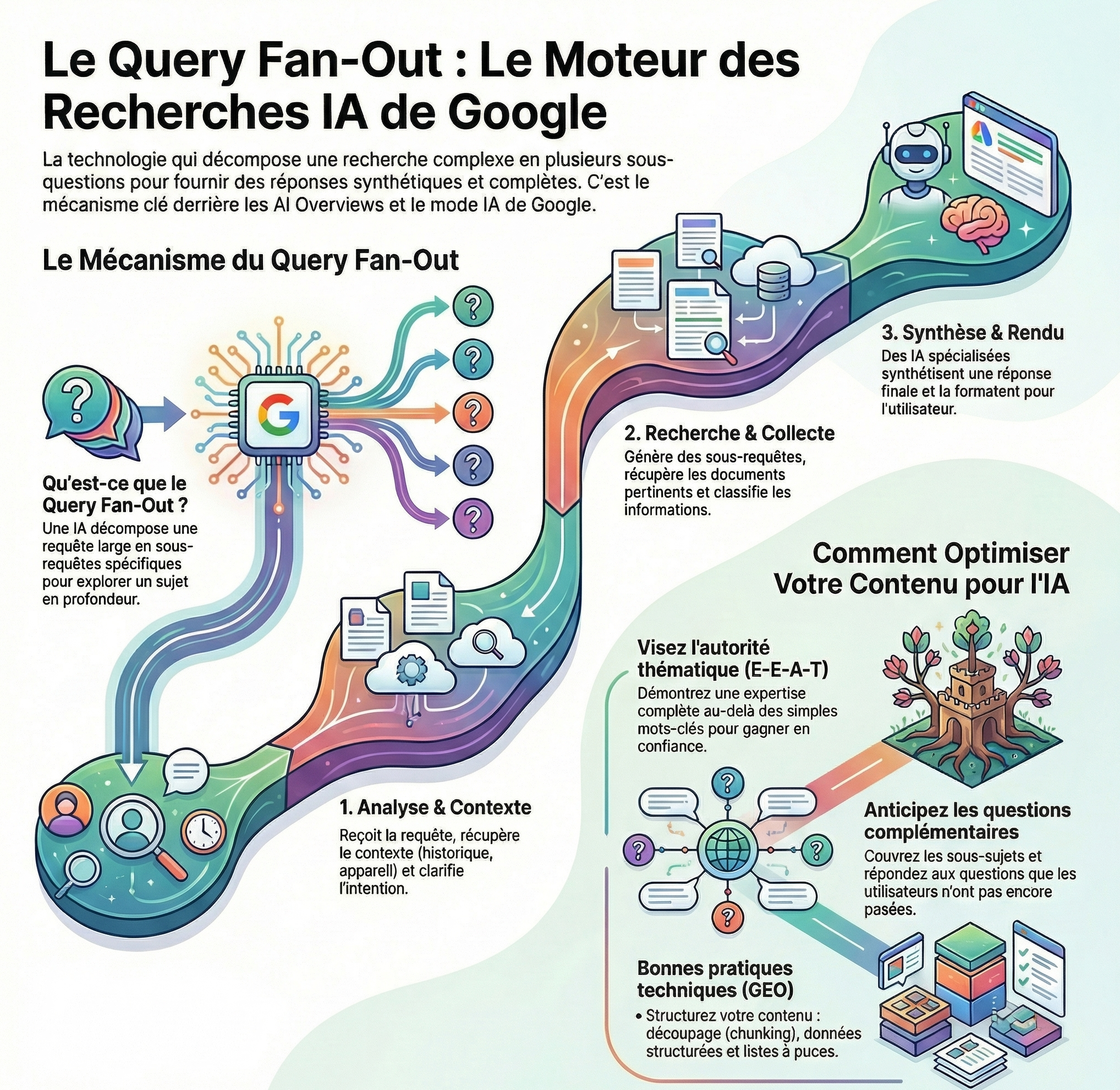
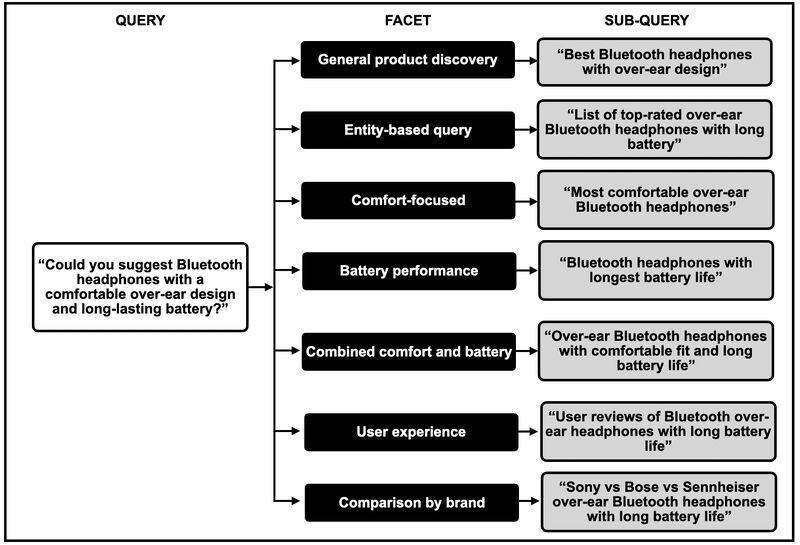
The “query fan out” is a process by which an artificial intelligence or a search engine breaks down an initial request, often complex or wide, into multiple sub-queries more specific. These sub-queries to explore different angles, entities or intentions related to the original subject, and are sent in parallel to explore various sources of information prior to synthesize a complete and nuanced.

Query Fan out technology behind’VE Overviews and IA Mode
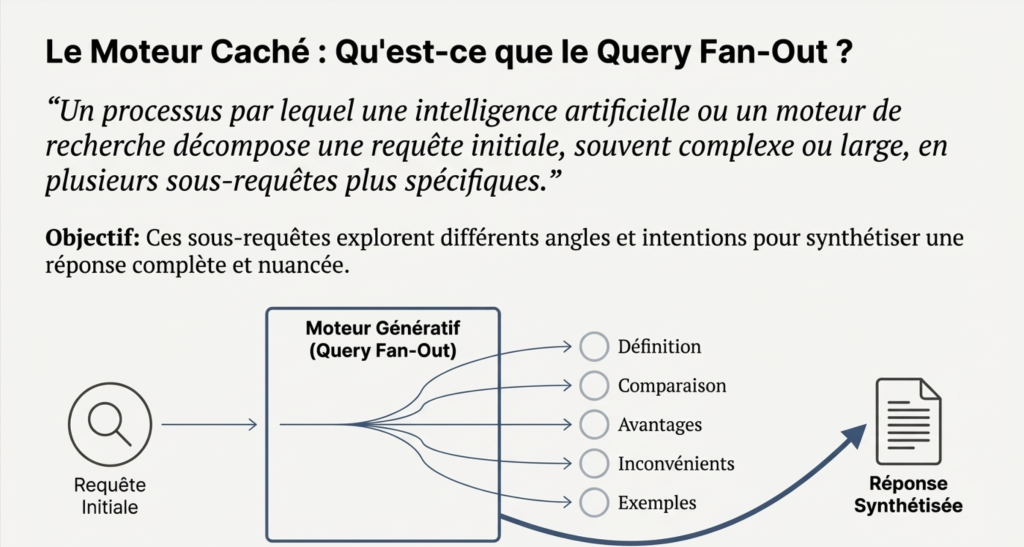
The query fan out is used in the Google AI Overviews, as well as the IA Mode of Google. We know thanks to the leaks ‘happy warehouse leaks,’ as well as the trial Google VS. DOJ.
As I Overviews will soon arrive in France, it is the moment totalk about to know how to optimise content for this technology.
PS : Query Fan Out is also used by the other engines generative as Chatgpt, perplexity, and of course the Gemini(llm under the hood of the AI Overviews and IA Mode)

Here’s what Google says on its official documentation :
In the background, the mode AI uses our technique of distribution of queries, which break down your question into sub-themes and issues simultaneously a multitude of requests on your behalf. This allows the searchto explore the Web a more in-depth thana traditional research on Google, helping you discover more content and to find information incredibly relevant that match your query.
https://blog.google/products/search/google-search-ai-mode-update/#deep-search
What are the nine steps of the technical query fan‑out
The query fan out of Google AI Overviews and the way AI works as follows :
- Theuser asks a question
- Google retrieves thehistory of research, the signals from thedevice and the user account, etc
- To cut the initial request : theAI analyzes the query is complex or long to identify the different concepts, intentions and ambiguities.
- It breaks down the overall intent of elements more small and manageable.
- Generation of sub-queries (Fan-Out) : theAI creates several sub-queries precise and semantically close, each of which explores an angle or a different nuance of the original subject.
- Search simultaneous parallel : all of these sub-queries are executed in parallel on different databases, search engines, knowledge graphs, etc, in order to explore the semantic field to the maximum.
- Aggregation of the results : the results of these multiple sub-queries are then combined, synthesized, and structured to provide a complete response, consistent, and optimized.
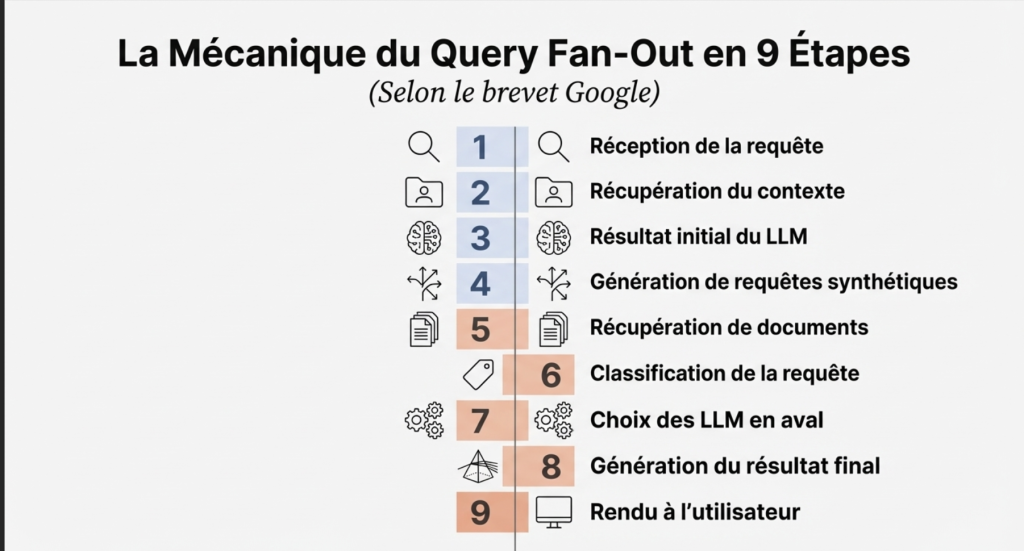
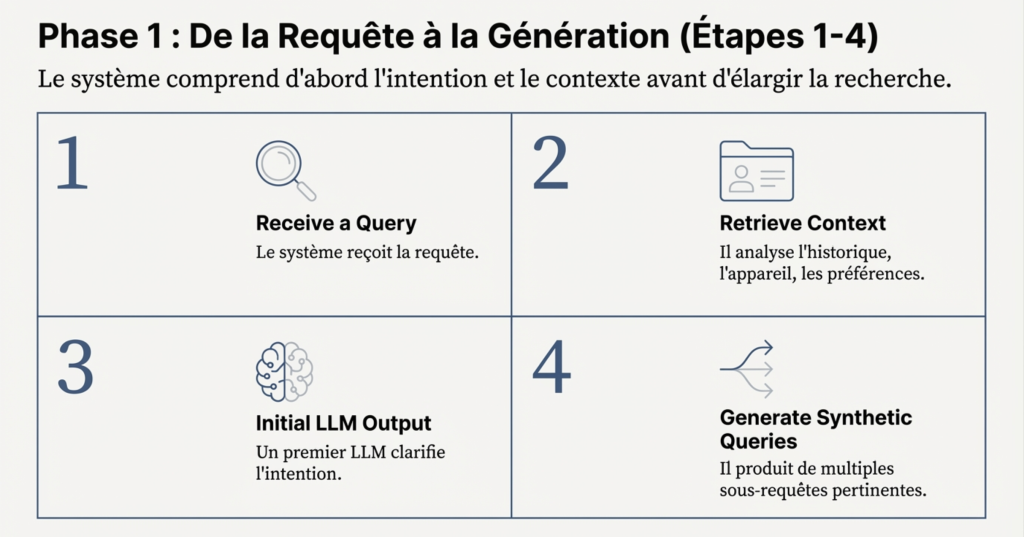
In the patent of the original Google, rather they talk about the 9 distinct stages. Let’s look quickly these steps.
1 – Receive a Query (Reception ofa query)
The system receives the user query.
2 – Retrieve Context (Reception of the context)
It retrieves the relevant contexts : historical, device preferences.
3 – Initial LLM Output(Result of the initial LLM)
A first LLM analyzes the query and clarifies the intent.
4 – Generate Synthetic Queries(query Generation synthetic)
The system produces several sub-queries that are relevant.
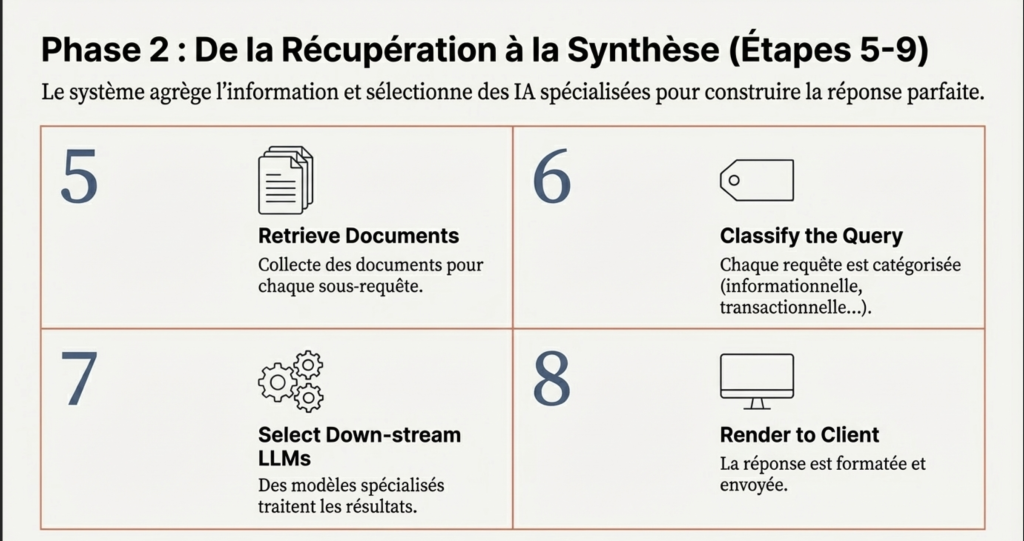
5 – Retrieve Documents(document Retrieval)
This collection of documents for each sub-query.
6 – Classify the Query(Classification of the query)
Each query is categorized according to its type (info, action, etc).
7 – Select the Down-stream LLMs(Choice of LLM downstream)
Models, specialized process the results according to the need.
8 – Generate Final Output(the Generation of the final result)
All the information is synthesized into a coherent response.
9 – Render to Customer(theuser)
The final response is formatted and sent to the user.
Practical overview of the Query method Fan Out
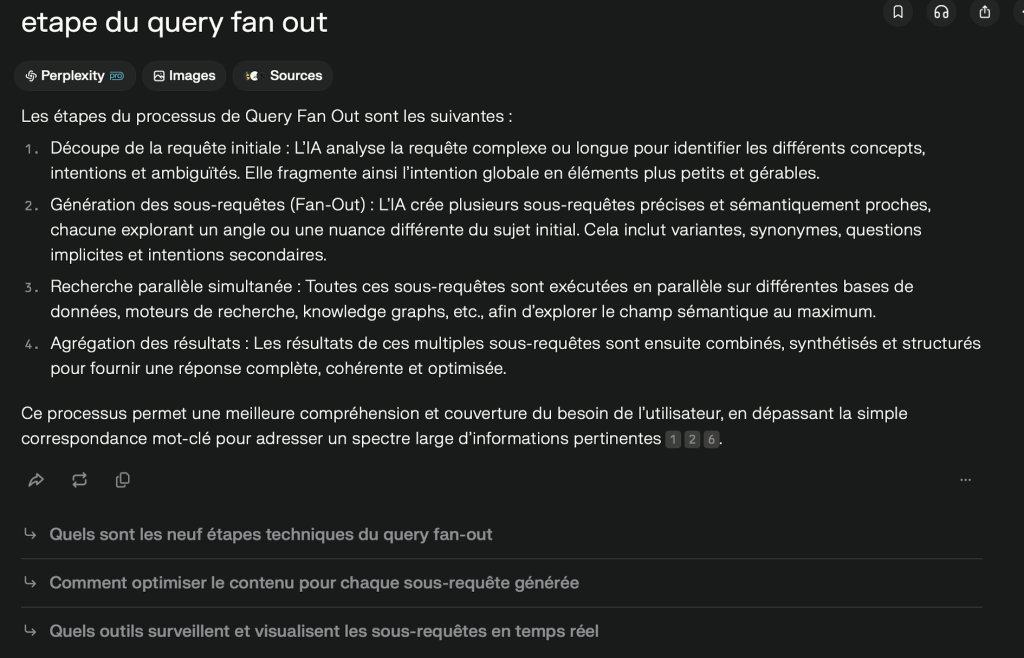
In my opinion, the best way to see the Query Fan-Out in action, it is to use Perplexity Pro.
With this version, you can view all the sub-queries generated by the LLM for each question that you ask.
I put an example below.
What tools generate the Query Fan Out ?
Several tools are available on the canvas to generate the Query Fan Out :
Otterly
According to me, Otterly is today the best tool to generate Query Fan-Out. It’s free, very easy to use, and you can even choose the scan mode you want.
Small precision : Otterly distinguishes a “AI Mode” and Google HAVE Overviews. The first is much more advanced, while the Overviews provide answers lighter, because they rely on Google Fast Search a topic that Iwill discuss in depth another time
Profound
Profound is a tool to a whole other level. Unlike free solutions, it runs on a subscription basis, with offers starting at $ 99 per month.
His promise is more ambitious : in addition to the analysis of the sub-queries generated by the Query Fan-Out, Profound also offers a follow-up to the visibility of your brand in the LLM as ChatGPT, Gemini, and other models major.
And this is not all : the platform goes a step further offering of services optimization and integration of brand directly in the models of IA.
Personally, I have a small doubt on the extent to which this is true… but good.
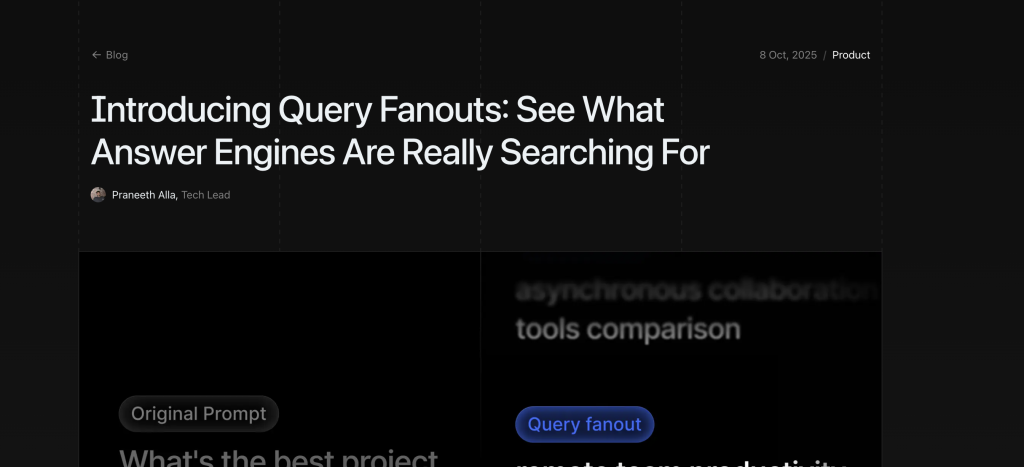
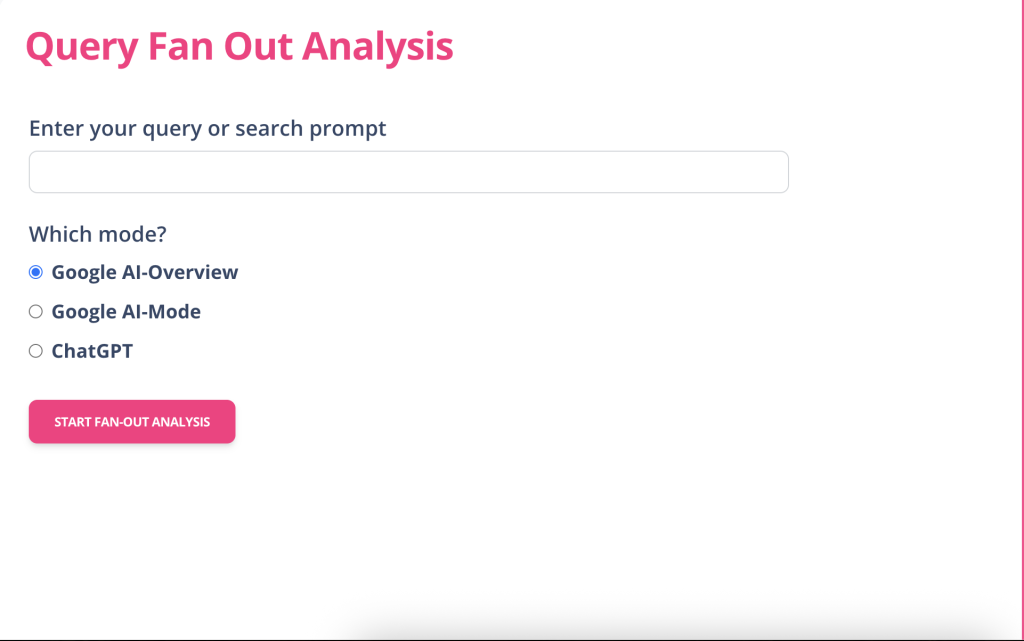
Query Fan Out generator
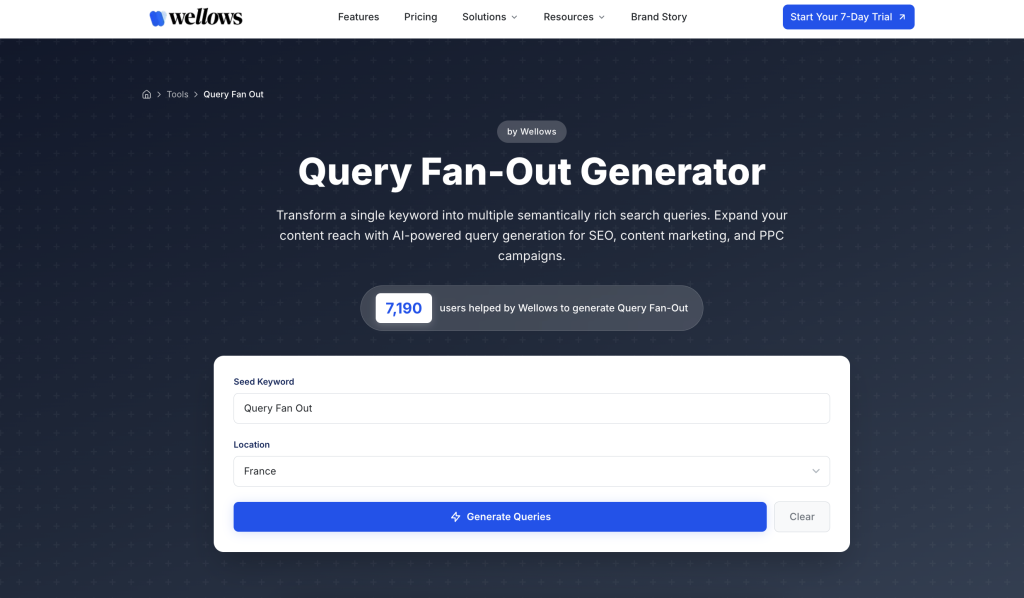
This generator is not bad too ! I have tested it and it has some advantages :
- It categorizes the sub-queries in order of priority.
- It allows you to download the sub-queries to integrate easily with its content strategy.
- And what’s more, it is free.
Tools to extract the Query Fan Out of Chatgpt
SEO Pub ChatGPT Search Query and Reasoning Extractor
This bookmark allows you to retrieve the Query Fan-Out since ChatGPT.
Create it in your browser (Chrome is preferred) and click on it after running a query.
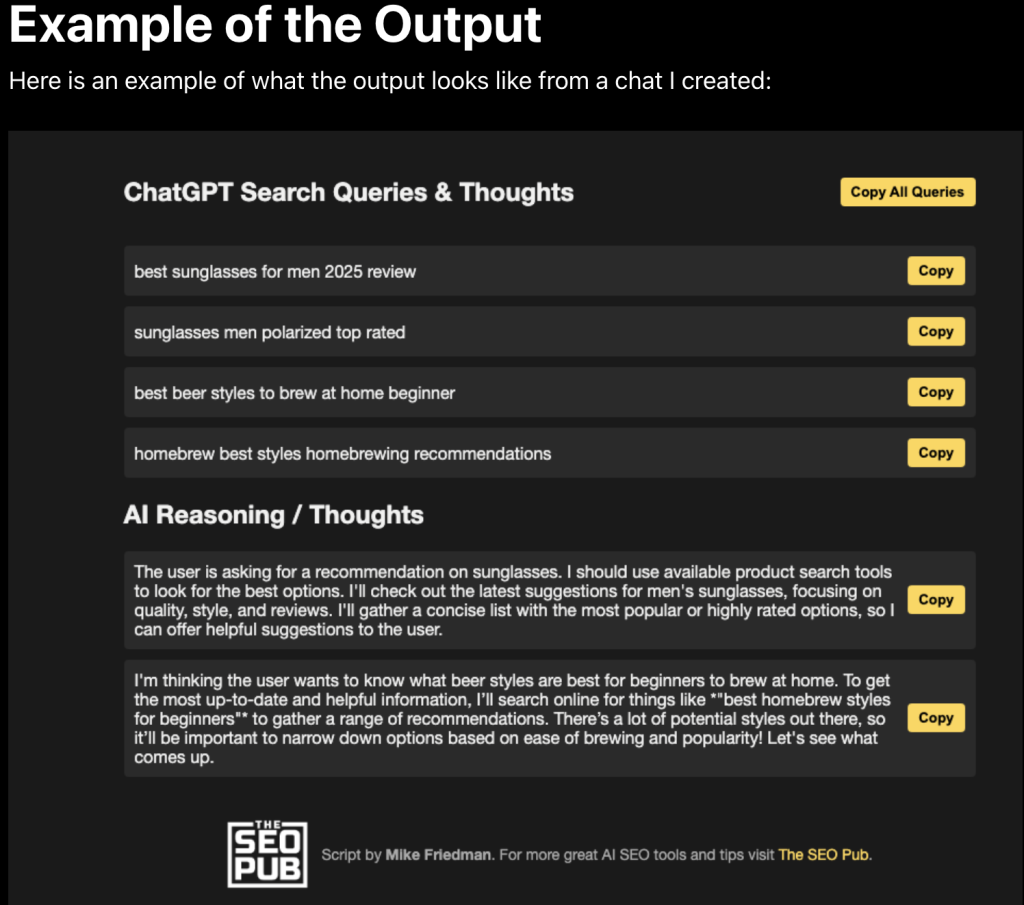
Personally, it works rarely : either ChatGPT remains discrete, or the technique no longer works. In short, not very reliable.
Extract the Query Fan Out of Chatgpt manually
Edward Sturm, SEO consultant, has proposed a little tutorial to extract the Query Fan-Out from a discussion ChatGPT.
Personally, I tested it : it works, but the sub-queries are often rare, usually only one or two.
How to optimize the content for the Query Fan Out ?
- Use a tool Query Fan Out to identify the sub-queries
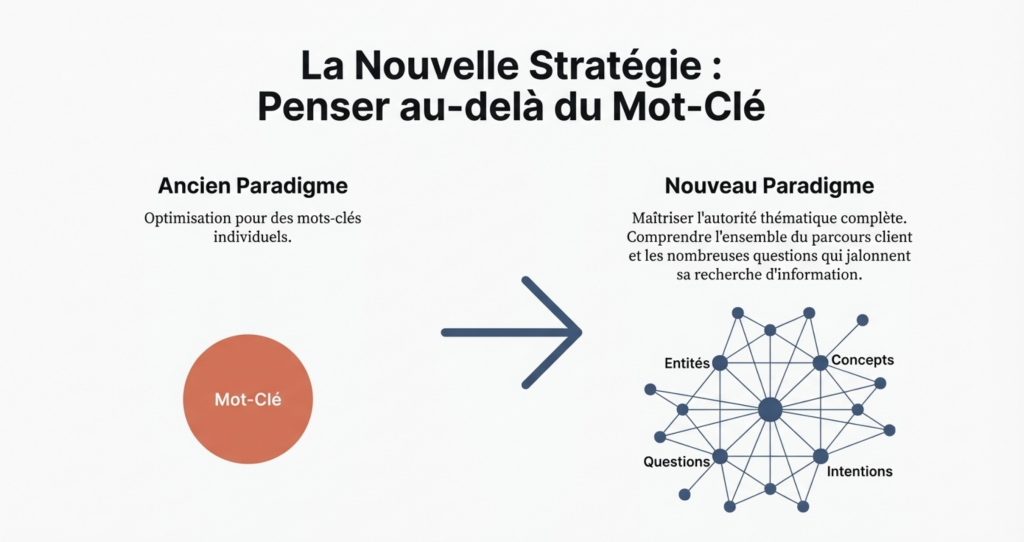
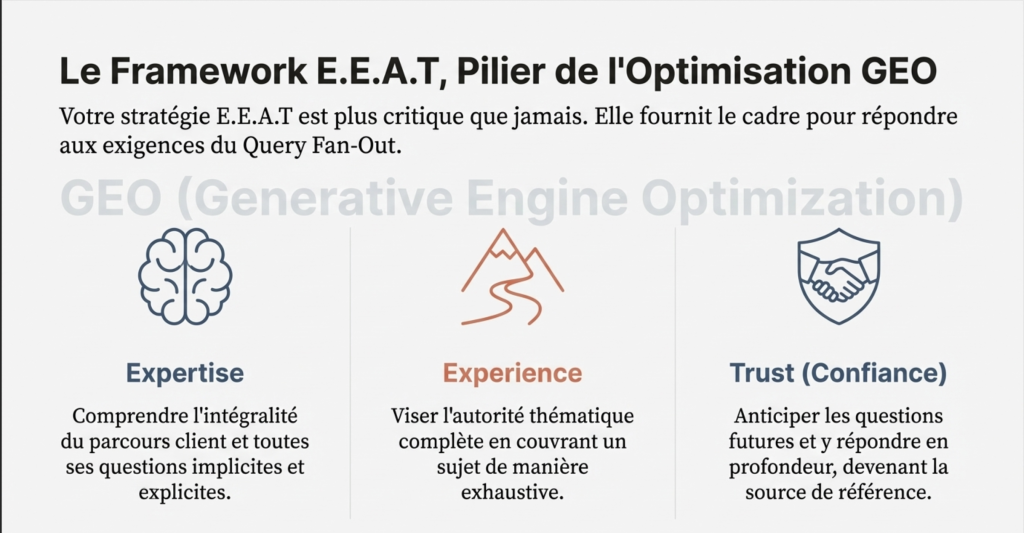
- Go beyond the simple optimization of keywords that individual : you need to understand theentire journey of your clients and the many questions thatthey ask on the subject that you’re dealing with. In other words, you must be a true Expert in your domain of Expertise of the E. E. AT)
- Authority comprehensive thematic to aim theauthority theme. (Experience of the E. E. A. T)
- Cover a topic comprehensively address all the sub-queries and relevant aspects, and connecting them semantically.
- Anticipate follow-up questions : the purpose of the query Fan Out is to lead the users to their following questions and provide the answers, even if they are not explicitly asked in the initial query.
- For any general topic that you are targeting, you will need to think about the sub-topics or angles thata user could explore, and provide in-depth responses and targeted for each sub-topic. (Trust your E. E. AT)
In addition to these instructions, you should also take into consideration the best practices for optimizing your content for the GEO(generative Engine Optimization) or theoptimization for the search engines, such as :
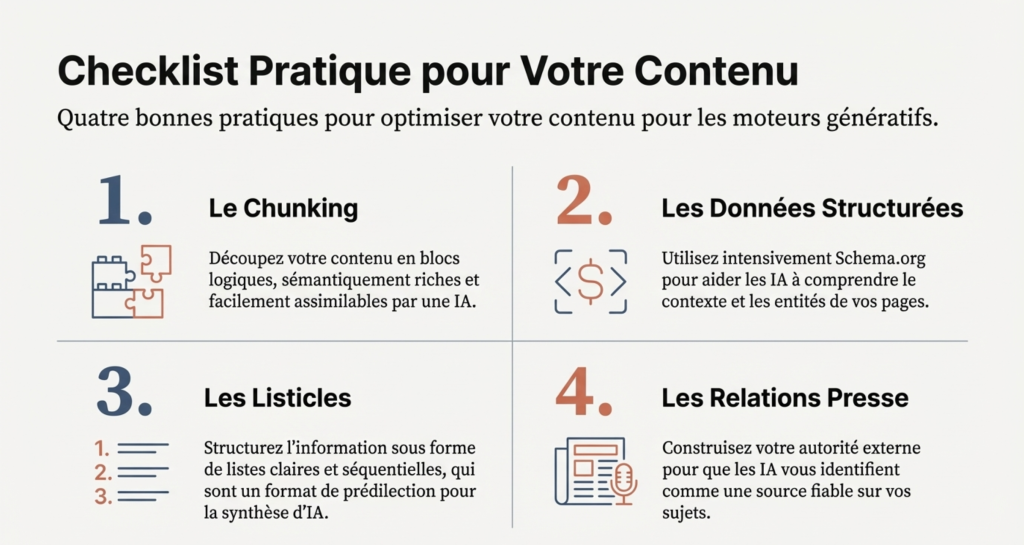
- The chunking (decoupage content)
- Adoption of structured data
- The listicles
- The press relations
My opinion on query fan out
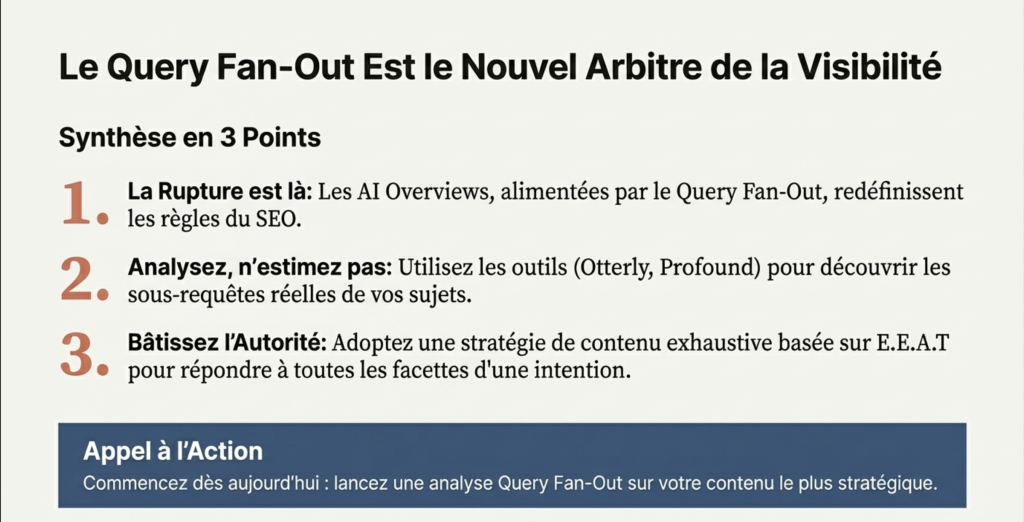
The Query Fan-Out breaks down a complex query into multiple sub-queries, explores different angles in parallel, and then synthesizes a complete response. Use this technique and the associated tools (Perplexity, Pro, Otterly, Profound) allows you to create a comprehensive, structured and optimized for search engines generative.


Leave a Reply